
That Frustrating Moment When Your Garage Door Won't Stay Closed
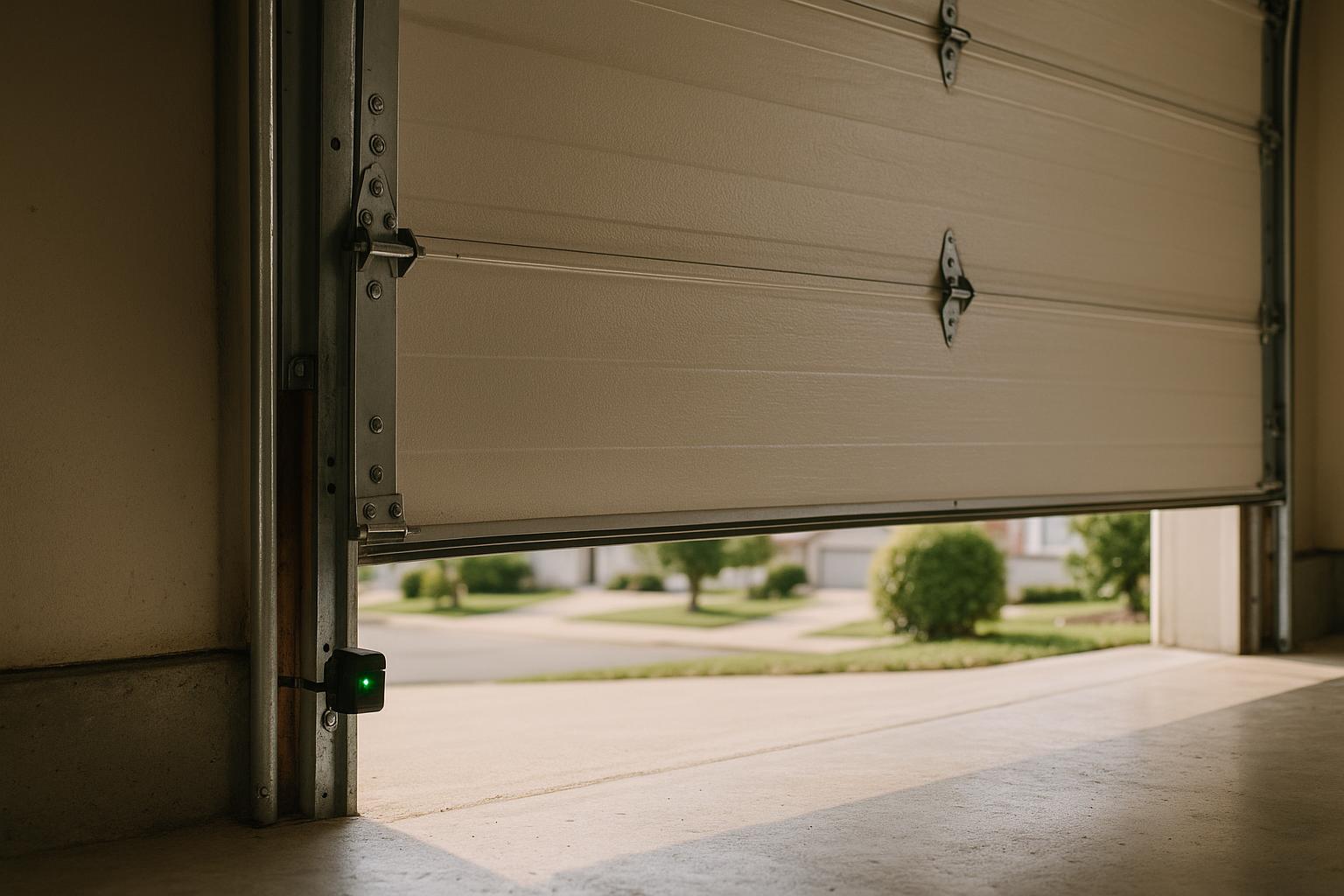
You press the button on your remote, the garage door starts its descent, and then — right before it reaches the floor — it stops and reverses back up. You try again. Same thing. Maybe it works on the third attempt, maybe it doesn't. Either way, you're standing in your driveway in Wilmington wondering what just happened.
This is one of the most common garage door complaints we hear, and the good news is that it's almost always fixable. The tricky part is that several different issues can cause the same symptom. Let's walk through the most likely culprits so you can understand what's going on before you call for help.
Understanding Why Your Garage Door Reverses
Modern garage door openers are designed with safety mechanisms that force the door to reverse if something seems wrong. This is actually a good thing — these features prevent the door from crushing objects, pets, or people. But when those safety systems misfire or when mechanical issues interfere, the door reverses even when there's nothing in the way.
Here are the most common reasons this happens:
1. Misaligned Safety Sensors
Every garage door opener manufactured after 1993 is required to have photo-eye safety sensors mounted near the bottom of the door tracks on each side. These sensors send an invisible beam across the opening. If something breaks that beam, the door reverses to avoid hitting it.
The problem is that these sensors can easily get bumped out of alignment. A kid kicks a ball near the track, someone nudges the sensor while moving a trash can, or the mounting bracket loosens over time. When the sensors can't "see" each other, the opener thinks there's an obstruction and reverses the door.
What to check: Look at both sensors. Most models have a small LED light on each unit. If one light is blinking or off entirely, that sensor is likely misaligned. Gently adjust the sensor until the light becomes steady. Also check for dirt, cobwebs, or debris on the sensor lenses — a quick wipe with a clean cloth can sometimes solve the problem instantly.
2. Incorrect Close-Limit Settings
Your garage door opener has limit settings that tell it how far the door should travel before it's considered fully open or fully closed. If the close-limit setting is off, the opener thinks the door has hit something when it reaches the floor because it's trying to push past its stopping point.
When the opener detects that kind of resistance, it treats it like an obstruction and reverses. This is especially common after a new opener installation or if someone has adjusted the settings without fully understanding how they work.
What to check: Your opener's manual will explain how to adjust the close-limit switch. It usually involves turning a small screw or dial on the back or side of the motor unit. Small adjustments make a big difference here, so go slowly.
3. Worn or Damaged Tracks
The metal tracks that guide your garage door up and down need to be clean, properly aligned, and free of dents or bends. If a track is bent, the rollers can bind or catch, creating resistance that the opener interprets as an obstruction. Living near the coast in Wilmington, we also see corrosion on tracks that haven't been maintained, particularly in neighborhoods closer to Wrightsville Beach and Carolina Beach where salt air accelerates rust.
What to check: Visually inspect both tracks from top to bottom. Look for obvious dents, bends, or gaps between the track and the wall. You can also check for debris or buildup inside the track channel.
4. Broken or Worn Springs
Your garage door springs do the heavy lifting — literally. They counterbalance the weight of the door so the opener doesn't have to work as hard. When a spring is weakening or has broken, the door becomes significantly heavier. The opener struggles to control the descent, senses the extra resistance, and reverses.
A word of caution: Garage door springs are under extreme tension and can be dangerous. If you suspect a spring issue, this is not a DIY repair. We strongly recommend calling a professional for spring replacement. It's one of the most common services we perform for homeowners across Wilmington, Leland, and Hampstead, and for good reason — doing it safely requires the right tools and experience.
5. Problems with the Opener's Force Settings
In addition to limit settings, your opener also has force settings that control how much power it uses to open and close the door. If the closing force is set too low, the opener may not have enough power to push the door all the way down, especially if there's even minor friction in the system. It gives up and reverses.
What to check: Like the limit settings, force adjustments are usually made with a dial or screw on the opener unit. Again, make small adjustments and test after each one. Be careful not to set the force too high, as this can override the safety reversal feature — which exists to protect your family.
6. Wiring or Electrical Issues
Frayed wires, loose connections, or damaged wiring between the opener and the safety sensors can cause intermittent reversal problems. Rodents sometimes chew through wires in garages, and the humidity we experience here in southeastern North Carolina can contribute to corrosion on electrical connections over time.
If you've checked everything else and the problem persists — or if it comes and goes unpredictably — there may be an electrical issue that requires professional diagnosis.
When to Call a Professional
Some of these fixes are straightforward enough for a handy homeowner to tackle. Cleaning sensor lenses, checking alignment, and making minor adjustments to limit or force settings are all reasonable DIY tasks. But there are situations where calling a garage door technician is the smarter move:
- The door is extremely heavy or hard to lift manually (likely a spring issue)
- You see visible damage to tracks, cables, or hardware
- The problem persists after you've tried basic troubleshooting
- You're not comfortable working with the opener's settings
- The door reverses violently or makes loud grinding noises
At Wilmington Garage Door Service, we diagnose reversal issues every week for homeowners from Porters Neck to Carolina Beach. We'll figure out exactly what's causing the problem, explain your options in plain English, and get your door working properly — usually in a single visit.
Preventing Future Problems
Regular maintenance goes a long way toward preventing reversal issues before they start. Here's a simple routine you can follow a few times a year:
- Clean the safety sensor lenses with a soft cloth
- Visually inspect the tracks for damage or debris
- Lubricate the rollers, hinges, and springs with a garage door-specific lubricant
- Test the door's balance by disconnecting the opener and lifting the door manually — it should stay in place when halfway open
- Test the safety reversal by placing a roll of paper towels under the door and closing it — the door should reverse upon contact
If anything seems off during these checks, it's better to address it early than to wait for a complete failure — especially when you're trying to get to work on a Monday morning.
Get Your Garage Door Working Right Again
A garage door that won't close all the way isn't just annoying — it's a security risk for your home. If you're dealing with a reversing garage door in Wilmington or the surrounding areas, give us a call. We'll show up on time, find the problem, and fix it right the first time. That's what we do.