
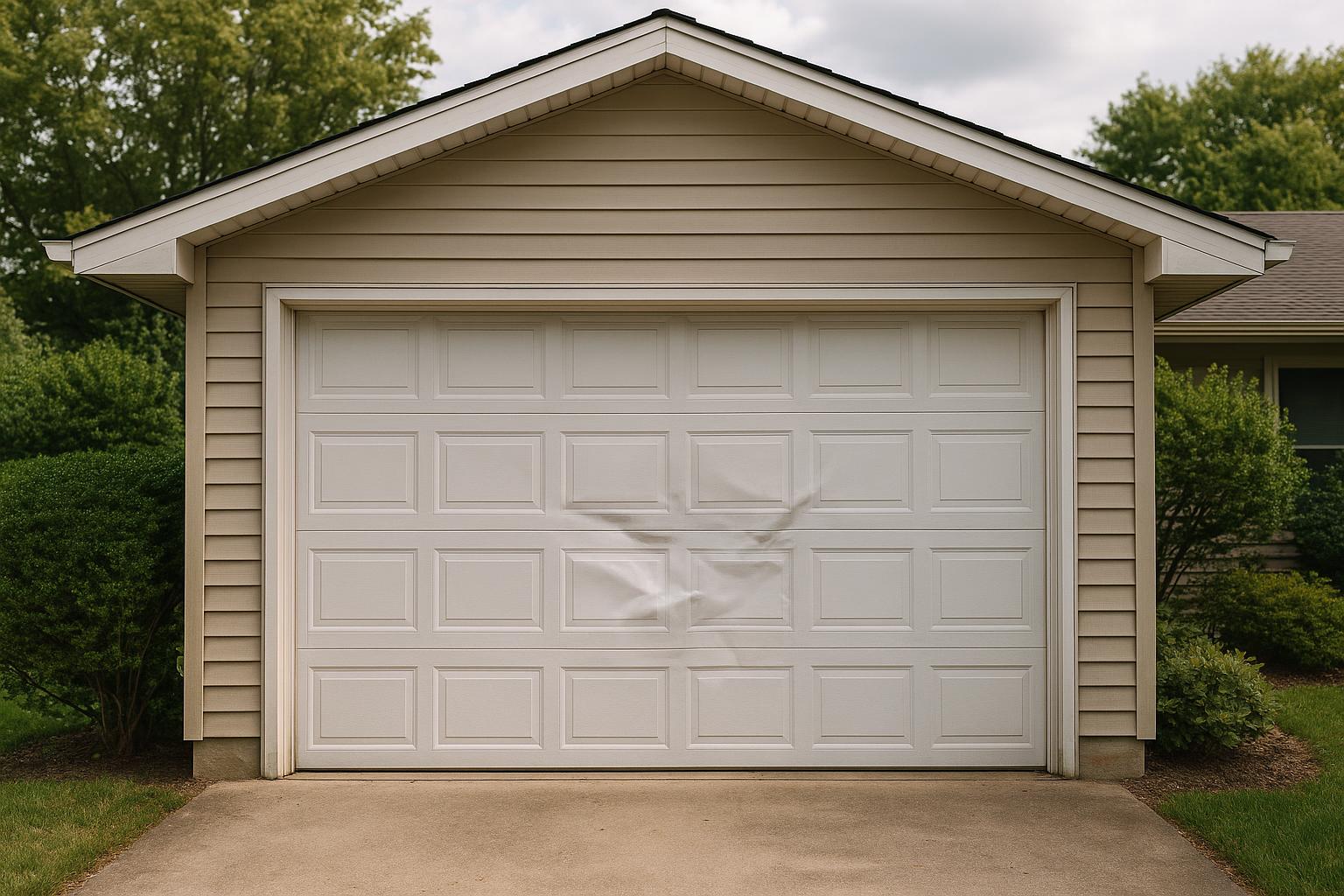
That Dented Panel Is Staring at You — Now What?
Maybe you backed into it. Maybe a stray basketball finally found its mark. Or maybe a coastal storm in Wilmington sent something flying into your garage door and left behind an ugly dent, crack, or hole. Whatever happened, you're now looking at a damaged garage door panel and wondering: Do I really need to replace the whole door, or can I just fix this one section?
It's a great question — and the answer depends on several factors. Let's walk through what to consider so you can make a smart decision without overspending or cutting corners.
How Garage Door Panels Work
Most modern garage doors are made up of individual horizontal panels (also called sections) that are hinged together. When the door opens, these panels follow the curved track and stack along the ceiling of your garage. Because they're separate sections, it's often technically possible to replace just one panel without swapping the entire door.
That said, "technically possible" and "the best idea" aren't always the same thing. Here's what you need to think about before deciding.
When Replacing a Single Panel Makes Sense
A panel replacement is usually the more affordable route, and it can be the right call in several situations:
- The damage is limited to one panel. If only one section has a dent, crack, or small hole and the rest of the door is in good shape, a single panel replacement can save you hundreds of dollars compared to a full door installation.
- Your door is relatively new. If your garage door is less than 10 years old and the manufacturer still produces matching panels, finding a replacement that fits and looks right is usually straightforward.
- The structural integrity is intact. A cosmetic dent is very different from a panel that's bent so badly it's affecting how the door opens and closes. If the tracks, springs, and other hardware are all functioning normally, a panel swap can get you back to normal quickly.
- You're happy with your current door. If you like the style, color, and insulation of your existing door, there's no reason to replace the whole thing over one damaged section.
When a Full Garage Door Replacement Is the Better Choice
Sometimes, replacing a single panel isn't practical — or it's just not the smartest investment. Here's when it makes more sense to consider a new door:
- Your door is old and the panel is discontinued. Garage door manufacturers update their product lines regularly. If your door is 15 or 20 years old, there's a good chance the exact panel style, color, or design is no longer available. A mismatched panel can look worse than the dent it replaced.
- Multiple panels are damaged. If two or more panels need replacing, the cost starts approaching — or even exceeding — the price of a brand-new door. At that point, you're better off investing in a full replacement and getting a door that's uniform, modern, and under warranty.
- The door has underlying issues. Damaged panels sometimes reveal bigger problems. If the tracks are bent, the springs are near the end of their lifespan, or the door has been sagging for a while, patching one panel won't address the real issue. A full replacement lets you start fresh.
- You want to upgrade. If your current door is outdated, poorly insulated, or doesn't match your home's curb appeal, a damaged panel might be the nudge you need. Wilmington homeowners upgrading to an insulated door often notice a real difference in their garage temperature during our humid summers and occasional cold snaps.
- You're planning to sell your home. A new garage door consistently ranks as one of the top home improvement projects for return on investment. If you're getting your home market-ready, a fresh door makes a stronger impression than a patched one.
What About Color Matching?
This is one of the trickiest parts of panel replacement. Even if the manufacturer still makes your panel, the new one might not perfectly match the rest of your door. Sun exposure, salt air — especially here along the coast near Wrightsville Beach and Carolina Beach — and general weathering cause paint and finishes to fade over time. A brand-new panel next to faded ones can stick out noticeably.
In some cases, repainting the entire door after a panel replacement can solve the color mismatch. But that's an added cost and step to factor into your decision.
Can You DIY a Panel Replacement?
We strongly recommend against it. Garage door panels are heavy, and removing and reinstalling them involves working with the door's tension system, tracks, and hardware. Garage door springs are under extreme tension and can cause serious injury if handled incorrectly. Even a straightforward panel swap requires the right tools, experience, and safety precautions.
A professional technician can also assess whether the damage goes deeper than what's visible — things like a slightly warped track or a cable that's starting to fray. Those are problems you want caught early, not after they cause a bigger failure.
How Much Does a Panel Replacement Cost vs. a New Door?
Costs vary depending on the door style, material, and manufacturer, but here are some general ranges to give you a ballpark:
- Single panel replacement: Typically runs between $200 and $600 installed, depending on the panel size, material, and whether it's insulated.
- Full garage door replacement: A standard single-car door installation usually starts around $800 to $1,500, while double-car doors and premium styles can range higher.
When the cost of replacing two or more panels gets close to half the price of a new door, most homeowners in the Wilmington area find that a full replacement offers better long-term value.
How We Help You Decide
At Wilmington Garage Door Service, we don't push unnecessary replacements. When we come out to assess panel damage, we'll tell you honestly whether a single panel replacement will solve the problem or whether a new door is the smarter investment. We look at the age of your door, the availability of matching panels, the condition of your springs and hardware, and your budget.
If a panel swap is the right move, we'll handle it quickly and make sure everything operates smoothly. If a full replacement makes more sense, we'll walk you through your options — styles, materials, insulation levels — so you can choose a door that fits your home and your budget.
Don't Ignore a Damaged Panel
A cracked or badly dented panel isn't just an eyesore. It can compromise your garage's security, let in moisture and pests, and put extra strain on your opener and springs as the door struggles to travel its track properly. Whether you go with a repair or a replacement, addressing the damage sooner rather than later saves you money and headaches down the road.
If you've got a damaged garage door panel and you're not sure what to do next, give us a call. We serve homeowners across Wilmington, Leland, Hampstead, Porters Neck, and the surrounding coastal communities — and we're always happy to take a look and give you a straight answer.