
Your Garage Door Shouldn't Sound Like That
You press the button, and instead of the smooth hum you're used to, your garage door greets you with a grinding screech, a rhythmic banging, or a high-pitched squeal. If you're a homeowner in Wilmington, you've probably experienced this at least once — especially during the humid summer months when metal expands and lubrication dries out faster than usual.
A noisy garage door isn't just annoying. It's often an early warning sign that something needs attention before it becomes a bigger, more expensive problem. The good news is that many garage door noises have identifiable causes, and most can be resolved quickly by a trained technician.
Let's break down the most common garage door sounds, what they mean, and what you should do about each one.
Grinding or Scraping Sounds
A grinding noise when your garage door opens or closes usually points to one of two issues: worn-out rollers or a problem with the tracks.
Worn Rollers
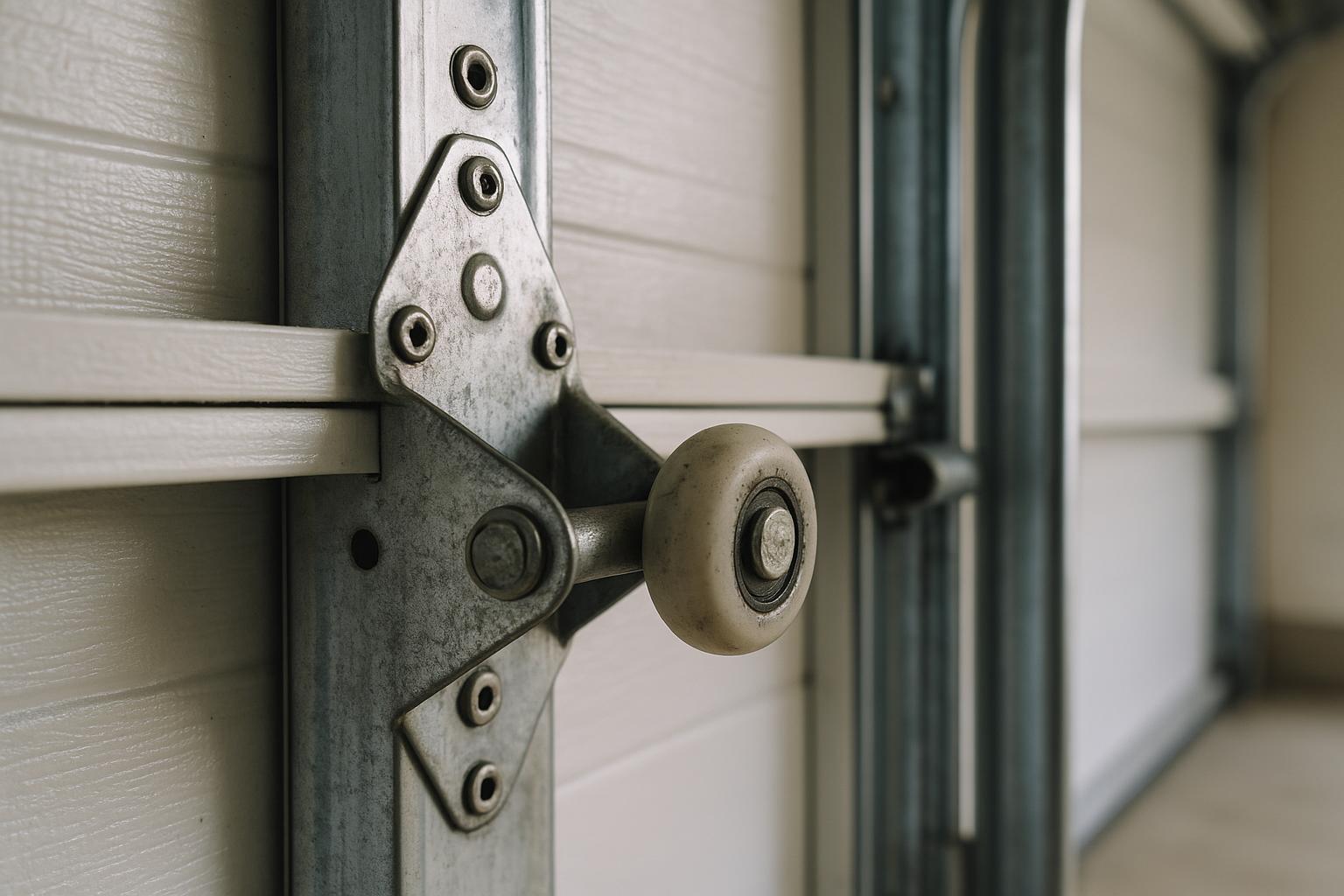
Most garage doors use nylon or steel rollers that glide along metal tracks. Over time, these rollers wear down. Steel rollers without ball bearings are especially prone to grinding as the metal-on-metal contact increases. If your rollers are cracked, chipped, or visibly worn, they need to be replaced.
Misaligned or Dirty Tracks
If debris, dirt, or small objects have accumulated in the tracks, the rollers can't move freely. You might also hear scraping if the tracks have shifted out of alignment. In Wilmington's coastal environment, salt air and humidity can accelerate corrosion on metal tracks, making this problem more common than in drier climates.
What to do: Inspect the tracks for visible debris and wipe them clean with a damp cloth. If the noise persists, the rollers likely need replacement or the tracks may need professional realignment.
Squealing or Squeaking Noises
A high-pitched squeal or squeak is one of the most common garage door complaints, and it's usually the easiest to address.
This sound typically means that moving parts — hinges, rollers, springs, or bearings — are dry and need lubrication. Wilmington's heat and humidity can cause lubricants to break down faster than expected, which is why regular maintenance matters so much in our area.
What to do: Apply a silicone-based or lithium-based garage door lubricant to the hinges, rollers, springs, and bearing plates. Avoid using WD-40 as a long-term lubricant — it's a solvent that can actually strip away grease over time. If lubrication doesn't stop the squealing, the components may be worn and need replacement.
Rattling or Vibrating Sounds
If your garage door sounds like it's shaking apart every time it moves, loose hardware is the most likely culprit.
Garage doors move up and down hundreds of times a year. That constant motion causes nuts, bolts, and screws to gradually loosen. The brackets that hold the tracks to the wall, the hinges connecting the door panels, and the fasteners on the opener itself can all work loose over time.
What to do: Grab a socket wrench and tighten all visible nuts and bolts on the tracks, hinges, and mounting brackets. Be careful not to over-tighten, which can strip threads or warp the tracks. If you notice any broken or missing hardware, have it replaced promptly.
Banging or Popping Sounds
A loud bang or pop when the door starts moving is more concerning. This sound often indicates a problem with the torsion springs — the tightly wound springs mounted above the door that do the heavy lifting.
As springs age and lose tension, they can slip or shift on the torsion bar, creating a sudden popping noise. In some cases, a loud bang could mean a spring has broken entirely. A broken torsion spring is a serious safety hazard and should never be handled as a DIY project.
What to do: If you hear a sudden, loud bang followed by your garage door refusing to open or feeling extremely heavy, stop using the door immediately and call a professional. Spring repair and replacement involve high-tension components that can cause severe injury if mishandled.
Rumbling or Vibration From the Opener
Sometimes the noise isn't coming from the door itself — it's coming from the garage door opener mounted on the ceiling.
Chain Drive Noise
If you have a chain-drive opener, some noise is normal. Chain drives are durable and affordable, but they're inherently louder than belt-drive models. However, if the rumbling has gotten noticeably worse, the chain may be loose or the drive gear inside the opener may be wearing out.
Vibration Transfer
Openers mounted directly to the ceiling joists can transfer vibration throughout the structure of your home, amplifying the sound. An anti-vibration mounting kit can reduce this significantly.
What to do: Check the chain tension according to your opener's manual — it should have about half an inch of play. If the internal gears are grinding, a technician can replace the gear kit without replacing the entire opener. If noise reduction is a priority, consider upgrading to a belt-drive opener, which operates much more quietly.
Clicking or Ticking Sounds
A repetitive clicking or ticking when the door moves can indicate that a roller is catching on a rough spot in the track, or that a hinge is slightly bent and not pivoting smoothly. It can also come from the opener's chain or belt skipping slightly.
What to do: Inspect the rollers and hinges visually. Look for flat spots on rollers or hinges that appear bent or cracked. These are inexpensive parts to replace but can cause bigger problems if ignored.
When to Call a Professional
Some garage door noises can be resolved with basic maintenance — a little lubrication, a few tightened bolts. But many noises signal underlying issues that require professional diagnosis and repair. Here's a good rule of thumb:
- DIY-friendly: Lubricating moving parts, tightening loose hardware, cleaning tracks
- Call a pro: Spring issues, track realignment, roller replacement, opener gear repair, any noise accompanied by the door not functioning properly
Ignoring unusual sounds can lead to a complete door failure at the worst possible time — like when you're rushing to work on a Monday morning or arriving home late at night.
Keep Your Garage Door Running Quietly in Wilmington
Living near the coast means your garage door faces extra challenges from salt air, humidity, and temperature swings. Regular maintenance — ideally once or twice a year — can prevent most noise issues before they start and extend the life of your door and opener by years.
At Wilmington Garage Door Service, we help homeowners across Wilmington, Wrightsville Beach, Carolina Beach, Leland, Hampstead, and Porters Neck keep their garage doors operating smoothly and quietly. If your door is making a sound that doesn't seem right, give us a call. We'll diagnose the problem, explain what's going on in plain English, and get it fixed — usually in a single visit.