
Your Garage Door Springs Are Doing More Work Than You Think
Every time you open or close your garage door, the springs are doing the heavy lifting — literally. A standard two-car garage door can weigh between 150 and 250 pounds, and the springs are responsible for counterbalancing all of that weight. Without them, your garage door opener couldn't move the door at all.
Given how hard they work, it's no surprise that springs are one of the most common garage door components to wear out. But most homeowners in Wilmington don't think about their springs until something goes wrong — and by then, they're usually stuck with a door that won't open or, worse, one that came crashing down.
Here's what you need to know about garage door spring lifespan, warning signs of failure, and when to schedule a replacement.
How Long Do Garage Door Springs Last?
The lifespan of a garage door spring is measured in cycles. One cycle equals one full open-and-close of the door. Most standard torsion springs are rated for around 10,000 cycles, which translates to roughly 7 to 10 years of typical use for an average household.
However, that number can vary widely depending on several factors:
- Frequency of use: If you use your garage door as your primary entrance — which many families in Wilmington do — you might be running four to six cycles per day instead of two. That cuts the lifespan significantly.
- Spring quality: Not all springs are created equal. Higher-quality, high-cycle springs rated for 20,000 or even 30,000 cycles are available and can last considerably longer.
- Climate and humidity: Living near the coast means your springs are exposed to salt air and higher humidity levels. This can accelerate corrosion and weaken the metal over time, which is something we see regularly in homes from Wrightsville Beach to Carolina Beach.
- Maintenance: Springs that are regularly lubricated and inspected tend to last longer than those that are neglected.
Torsion Springs vs. Extension Springs
Before we go further, it helps to understand the two main types of garage door springs:
Torsion Springs
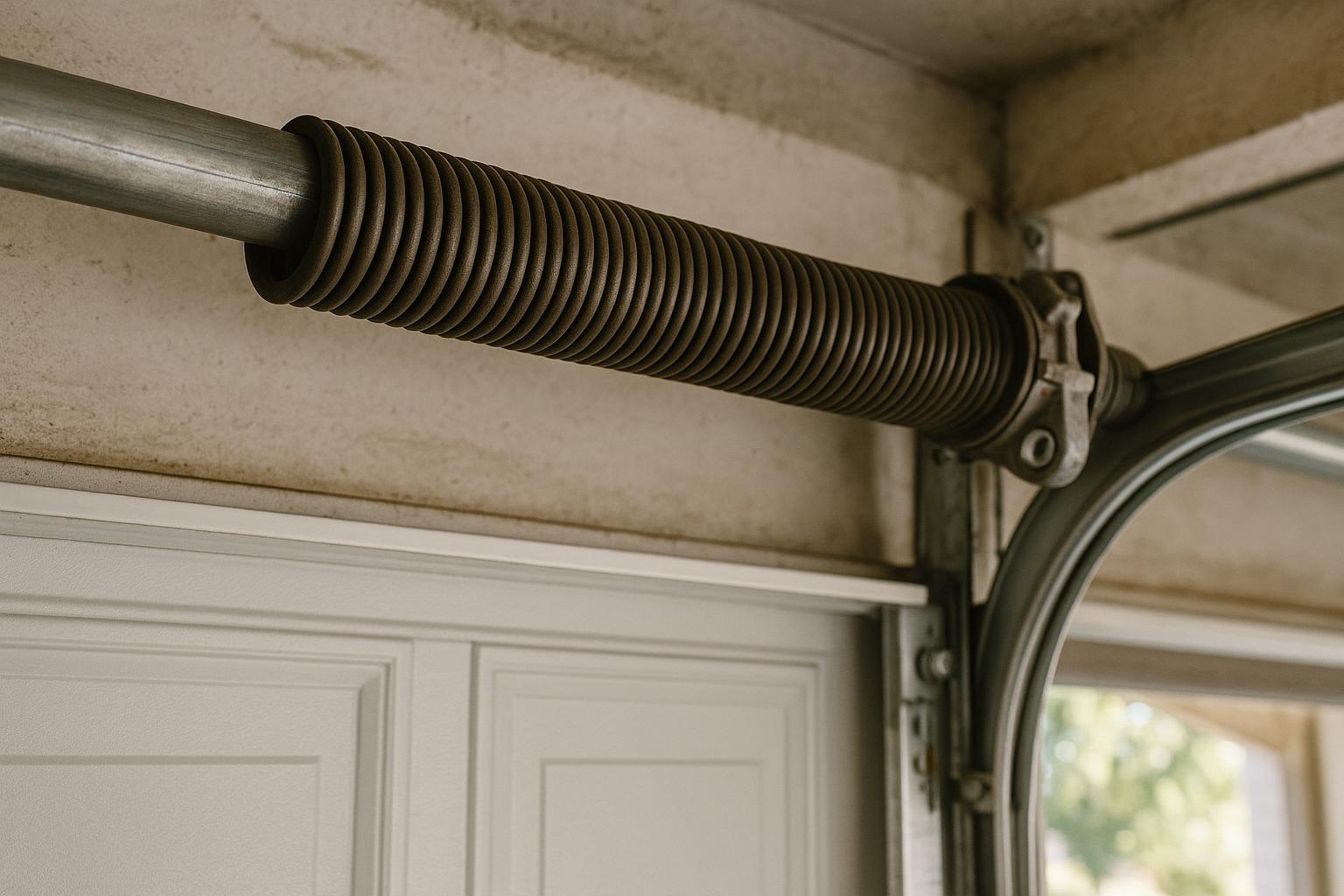
These are mounted horizontally above the garage door opening. They use torque to lift the door and are the more common type found in modern garage door systems. Torsion springs tend to be more durable, offer smoother operation, and are generally safer when they break because they're contained on a shaft.
Extension Springs
These run along the horizontal tracks on either side of the door. They stretch and contract to provide lifting force. Extension springs are more common in older homes and lighter doors. When they break, they can snap violently, which is why safety cables should always be installed alongside them.
If your home still uses extension springs, it may be worth upgrading to torsion springs during your next replacement. We can help you evaluate which system makes the most sense for your setup.
Warning Signs Your Springs Are Wearing Out
Springs rarely fail without warning. Here are the most common signs that your garage door springs are nearing the end of their life:
- The door feels heavier than usual: If your garage door seems harder to lift manually, the springs may be losing tension.
- The door opens unevenly: When one spring is weaker than the other, the door may tilt or rise crookedly.
- Visible gaps in the spring coils: A torsion spring that's about to break will often show a visible gap or separation between coils.
- Loud bang from the garage: If you heard a loud noise that sounded like a gunshot or a car backfiring coming from your garage, a spring likely already broke.
- The opener struggles or won't lift the door: Your opener is designed to move the door, not lift its full weight. If the springs aren't doing their job, the opener will strain, stall, or refuse to operate.
- The door slams shut quickly: A door that drops faster than normal when closing is a serious safety concern and usually points to failing springs.
Can You Replace Garage Door Springs Yourself?
We understand the DIY spirit — and there are plenty of garage door tasks that a handy homeowner can tackle. Spring replacement is not one of them.
Garage door springs are under extreme tension. A torsion spring that snaps or is improperly wound during installation can cause severe injury or even death. Every year, emergency rooms across the country treat people who attempted DIY spring replacement.
Professional technicians have the specialized tools, training, and experience to replace springs safely. At Wilmington Garage Door Service, we handle spring replacements daily and take every precaution to protect both our team and your property.
Should You Replace Both Springs at Once?
If your garage door has two torsion springs and only one has broken, we strongly recommend replacing both at the same time. Here's why:
- They've aged together: If one spring has reached the end of its cycle life, the other is likely close behind.
- Balanced performance: Mismatched springs — one new, one old — can cause uneven lifting, which puts extra stress on the door, the tracks, and the opener.
- Cost savings: The labor involved in replacing springs is the same whether you're doing one or two. Replacing both at once saves you from paying for a second service call in a few months.
How Coastal Living Affects Your Springs
Homeowners in Wilmington and the surrounding beach communities face a unique challenge that inland residents don't: salt air corrosion. The salty, humid air that rolls in from the coast can eat away at metal components faster than you'd expect.
We've seen springs in Hampstead and Porters Neck that corroded well before they hit their rated cycle count, simply because they were never lubricated or treated for rust. A simple maintenance routine — including applying a silicone-based lubricant to your springs two to three times a year — can go a long way toward extending their life in our coastal climate.
What to Expect During a Spring Replacement
If you schedule a spring replacement with our team, here's a quick overview of the process:
- We inspect the entire door system, not just the springs, to identify any other issues that need attention.
- We secure the door and release the tension on the old springs safely.
- We remove the worn springs and install new ones that are properly sized and rated for your specific door.
- We balance the door and test it through several cycles to make sure everything operates smoothly.
- We lubricate the new springs and other moving parts before wrapping up.
The whole process typically takes about an hour, and we'll walk you through everything we did before we leave.
Don't Wait for a Broken Spring to Take Action
A broken garage door spring is more than an inconvenience — it's a safety hazard and a security risk. If your car is trapped inside the garage, your morning routine grinds to a halt. If the door is stuck open, your home is vulnerable.
The best approach is to be proactive. If your springs are more than seven years old, or if you're noticing any of the warning signs listed above, it's time to have them inspected.
Wilmington Garage Door Service offers honest assessments and upfront pricing for spring replacement across Wilmington, Leland, Wrightsville Beach, Carolina Beach, Hampstead, and Porters Neck. We'll tell you exactly what's going on and what it'll cost — no surprises.
Give us a call to schedule an inspection, or reach out if a spring has already broken and you need emergency service. We're here to help.